Maya Tutor
Learn school topics by playing
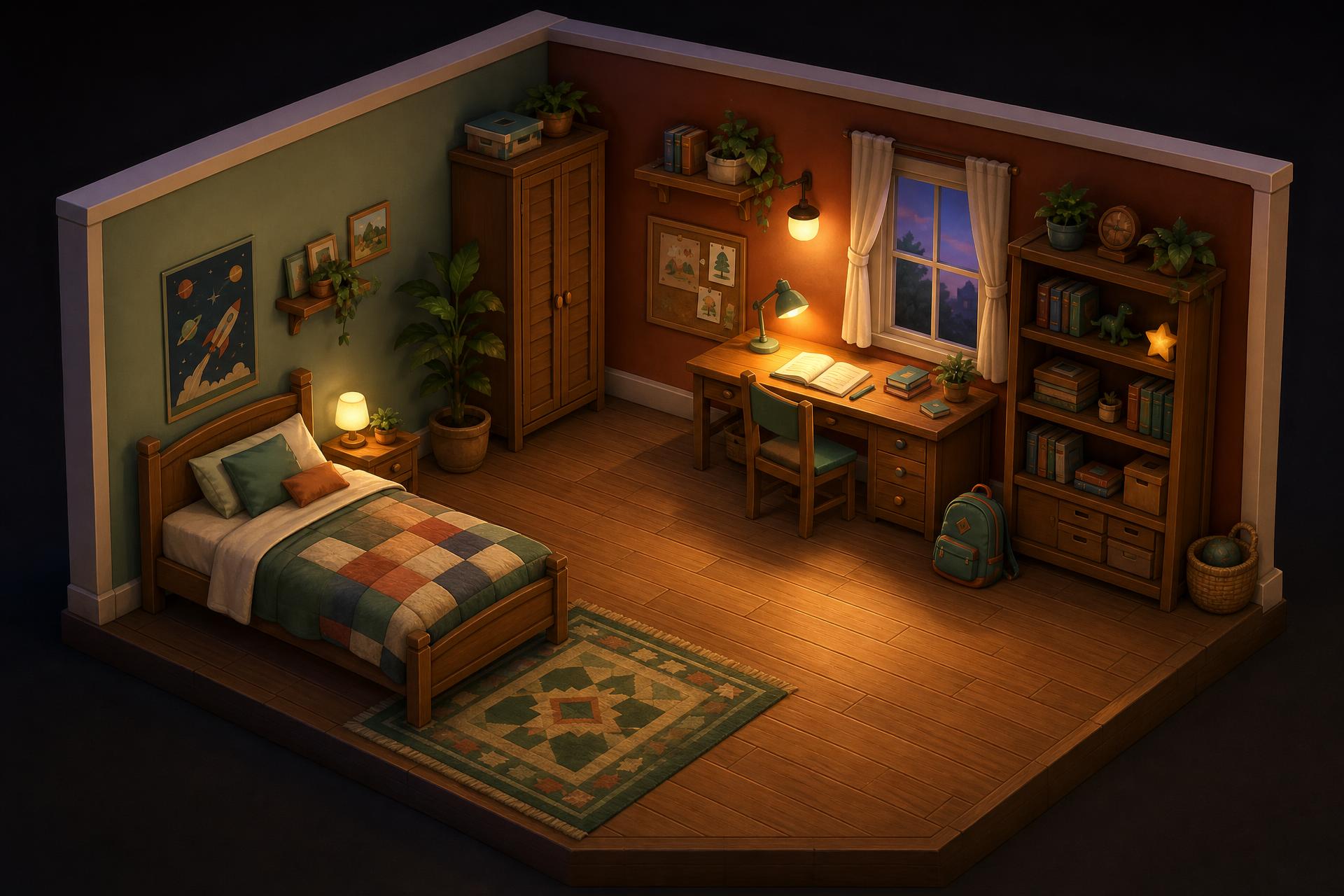
Maya teaches math, Hebrew, science, English and world studies by grade, inside a world your child can explore. Each topic is a lesson with tap-to-answer questions, and Maya explains why a mistake was tempting.
What can my child learn with Maya?
Five subjects, written lesson by lesson: math, Hebrew, science, English and world studies (in Israeli schools, moledet). The catalog holds 265 lessons for grades 1 to 10:
- Math — 80 lessons, from counting to 20 up to ratio and proportion.
- Hebrew — 50 lessons: punctuation, nouns and verbs, singular and plural, understanding a story.
- Science — 50 lessons: the senses, solids, liquids and gases, day and night, energy.
- English — 44 lessons: first words, simple sentences, present and past.
- World studies — 41 lessons: maps, north and south, towns and villages, water.
Each lesson is one topic, and each topic comes with the one misunderstanding it was written to catch.
How does a lesson with Maya go?
Whichever subject your child picks, a lesson goes the same way:
- Your child tells Maya what the class learned today, or shows her a photo of the worksheet.
- Maya teaches that topic with them, in short steps, at their grade.
- She asks questions they answer with a tap — no typing, no blank page.
- When an answer is wrong, she does not just say “try again”. She explains why that answer was tempting, and what was missing to reach the right one.
- She remembers what did not land, and comes back to it in later lessons.
Which grade is each lesson for?
Every lesson is written for one grade. Maya is made for grades 1 to 6, and the catalog continues to grade 10, so a child who is ahead has somewhere to go and a child who needs to go back can.
The English lesson pages list every lesson by grade and subject, with the mistake it was written to catch and a sample question. You can look through them before you start.
What mistake does Maya catch, for example?
In second-grade science, children learn what sinks and what floats. The tempting answer is that heavy things sink. Maya’s lesson takes the same piece of foil twice: squeezed into a tight ball, it can sink; folded into a boat, it floats.
The weight did not change, so weight was not the whole answer. What changed was the shape, and how much water it pushes aside.
That is the pattern of every lesson: name the idea that seems right, show where it breaks, then teach the idea that holds.
Is Maya safe for a young child?
Maya is built for children with a parent nearby, and the rules are written into her legal pages, not just promised on this one.
- Maya does not ask a child for an email address, a precise location or a friend list.
- There is no chat between children, no public feed and no ads in the lesson.
- Lessons that go through a language model stay locked until a parent confirms a link sent to their email.
- From the parent screen you can pause those lessons and delete the copy kept in the cloud.
- Children’s information is not sold, and there is no targeted advertising.
The full details are in the children’s privacy notice and the safety page, linked at the bottom of this page.
Maya or a private tutor: which does your child need?
Both help, but they answer different needs. Here they are side by side:
| Compared | Maya | A private tutor |
|---|---|---|
| When | Whenever your child opens it — the same evening the class learned the topic. | At a time booked in advance, when the tutor is free. |
| How long | One topic per lesson, at your child’s pace. | A fixed length agreed in advance. |
| What it covers | What the class learned today, at your child’s grade. | Whatever you agree with the tutor. |
| After a wrong answer | Explains why the answer was tempting, and remembers to come back to it. | Depends on the tutor. |
| Who teaches | Maya, on a screen, with lessons written in advance. | A person who sees and hears your child and can change the plan as they go. |
A human tutor is the better choice for exam preparation, for teenagers, for practising a spoken language, and for a child who needs a person beside them. Maya is for the everyday: the evening after school, when a topic did not land and nobody is free to explain it again.
You can also have both: if your child sees a tutor once a week, Maya can cover the other evenings.
Questions parents ask
Is Maya a game or a tutor?
Both. Maya is a private tutor, and her lessons happen inside a world your child can explore, so learning feels like play.
Are the lessons random drills?
No. Each lesson covers one school topic for one grade, and is built around the mistake children most often make on that topic.
Can my child choose the topic?
Yes. Your child can tell Maya what the class learned today, or pick a subject and a lesson from the catalog.
Which languages does Maya’s screen come in?
Eleven: English, Hebrew, Spanish, Portuguese, French, German, Russian, Arabic, Hindi, Chinese and Japanese.
Is the first lesson free?
Yes. The first lesson is free, and no card is needed. After that, Maya Plus is a subscription for more lessons.
No card needed.
Every lesson by grade and subject
Every lesson has its own page: the topic, the mistake it was written to catch, and a sample question.
Subjects